
U.S. COLORED TROOPS
THE CIVIL WAR COMES TO THE PLANTATION
On January 26, 1861, Louisiana seceded from the United States and two months later joined the Confederate States of America. The parishes along the Mississippi River quickly became engulfed in the war after New Orleans, the largest city in the Confederacy and a major port, was captured by Union forces. New Orleans was a key target of the Union as it was a gateway for Confederate provisions and supplies, as well as a transportation artery to the heartland of the South. Union gunboats commanded by Captain David Farragut slipped past Forts St. Philip and Jackson and took the city. The gunboats continued upriver toward Baton Rouge, shelling plantations and occupying the area. All along the way Confederates harassed Union vessels from the riverbanks and Farragut warned that if the attacks continued, the consequences would be disastrous. True to his word, he launched a vicious attack on Donaldsonville, leaving very little of the town standing after it was bombarded from the gunboats and burned by foot soldiers.
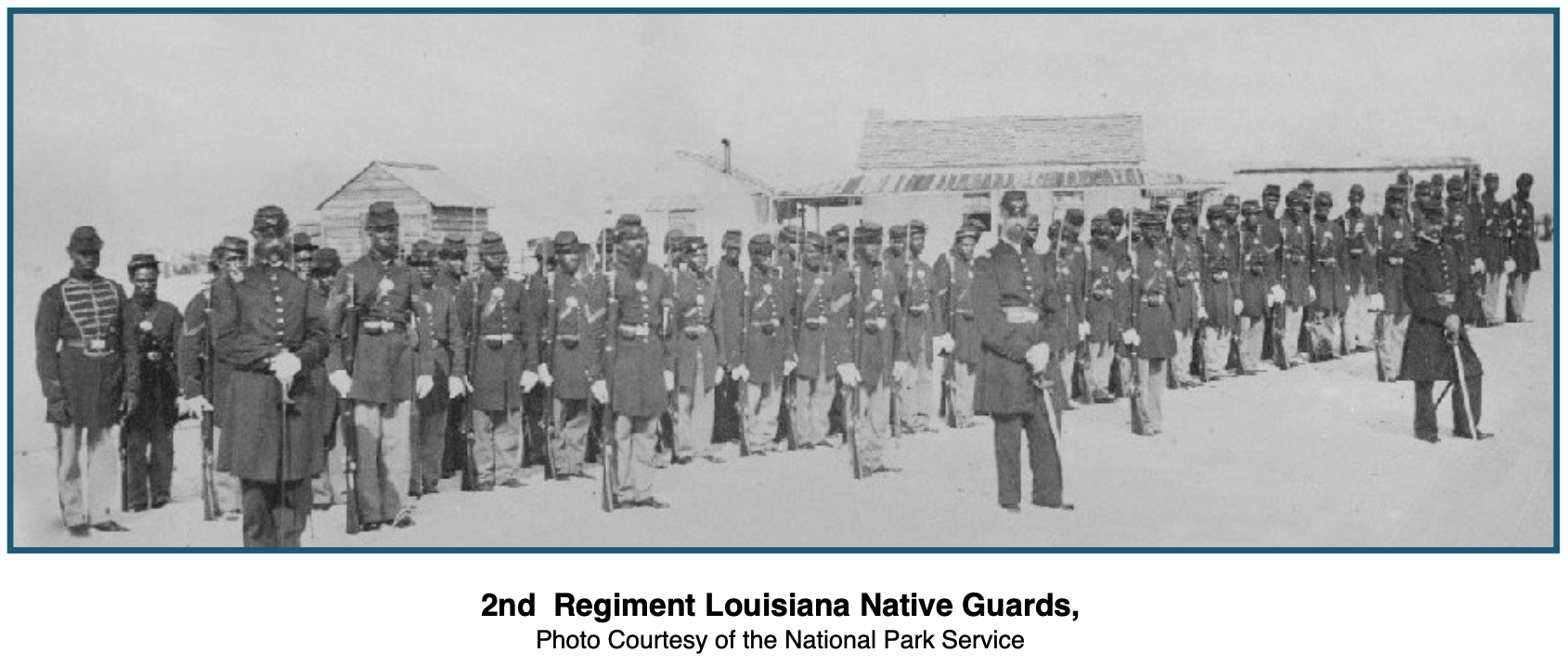
After this show of force, Confederate rebels continued to resist throughout the river parishes. As part of a campaign to gain control of the area, the newly organized Louisiana Native Guard, a militia composed of men of color, was dispatched to join the forces. These troops later became known as the Corps d’Afrique and then the United States Colored Troops.
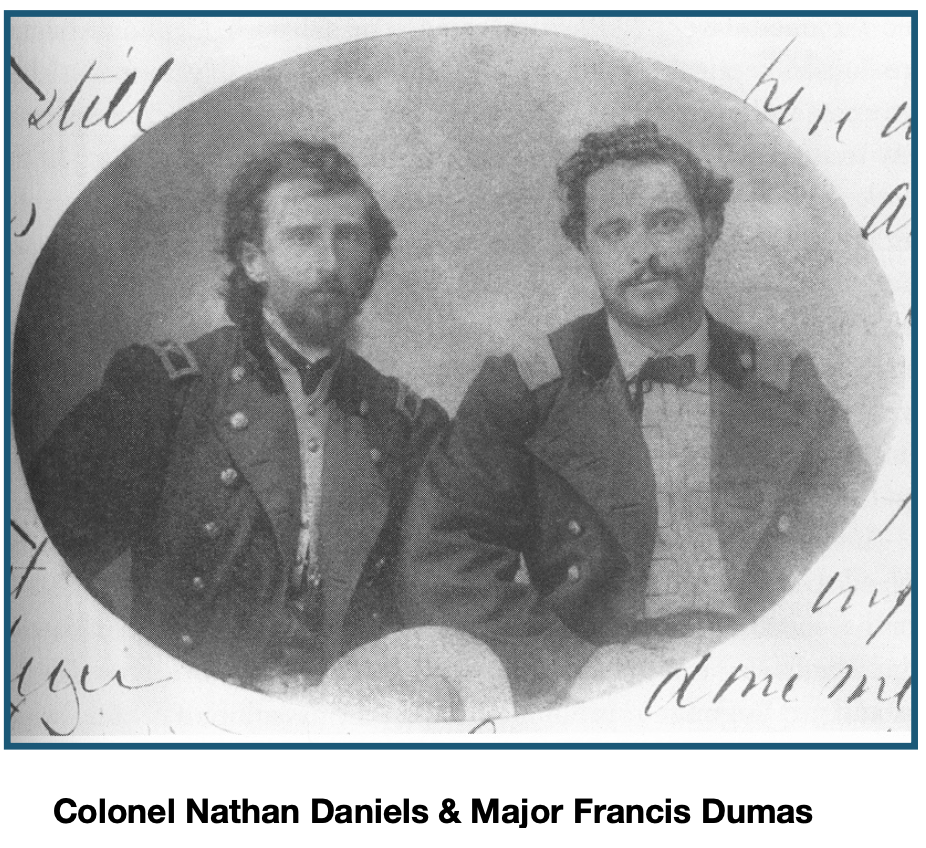
In early November 1862, Colonel Nathan Daniels, the commander of the 2nd Louisiana Native Guard, received complaints from local citizens in the settlement of Vacherie which lies adjacent to the Duparc & Locoul Plantation. Citizens reported that their supplies were being stolen and there were rumors of a Confederate force in the area. Colonel Daniels, along with Major Francis Dumas and Company B of the regiment, were sent to investigate.
Their route took them along the river road, through the countryside and directly to the Duparc & Locoul Plantation. Colonel Daniels and Major Dumas met with Flagy Duparc, the only remaining member of the family. They dined with Duparc that evening and left on rather cordial terms. Meanwhile, the colored troops had an opportunity to mingle with the members of the enslaved community.
The visit of the Union army was a catalyst for events that would impact the entire plantation community. Within days, many of the slaves loaded their meager belongings on to mules or into cane carts and sought refuge at the Boutte Station, a large Union encampment situated downriver and alongside the main rail line into New Orleans. Several of the men immediately enlisted in the Louisiana Native Guard, and in the months that followed, additional men would join the Union forces.
The following profiles tell the stories of the soldiers from the Duparc & Locoul Plantation, as well as others who served with them. The profiles also include information about their lives before and after the war, and acknowledge the contributions of their wives, family members, friends and fellow veterans.